
Studying and communicating the ocean's value and ecosystem services
The Marine Natural Capital Hub focuses on presenting outputs from the Defra marine Natural Capital Ecosystem Assessment (mNCEA) programme alongside selected contributions from JNCCs wider marine natural capital program. These resources are organised within a marine natural capital "workflow" to demonstrate how different types of evidence fit together in a typical marine natural capital assessment. The workflow brings together assets, ecosystem services, condition and benefits to support more joined‑up assessments of natural capital.
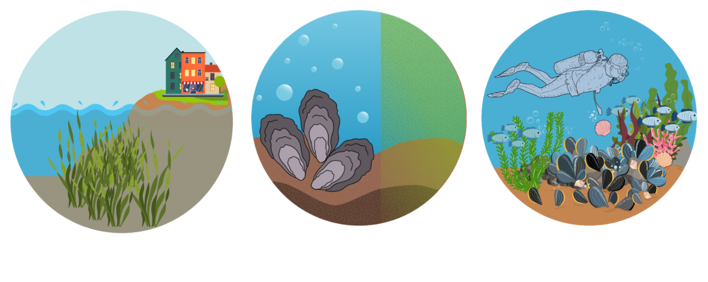
Introduction to Marine Natural Capital
The UK is an island nation with one of the largest and busiest marine areas in the world and is home to a myriad of protected habitats and species. These rich seas are responsible for the air we breathe, regulating our climate, protecting our coastal communities from flooding and much more.
Often, the value of these ecosystems isn’t considered by society when making decisions about extracting from them. The marine natural capital approach aims to incorporate this value, promoting a more holistic approach to utilising marine resources and ecosystems.
Marine natural capital refers to the habitats, species and physical features of the marine environment. The marine natural capital approach provides a structured way to explain how these components underpin ecosystem functions and deliver benefits to people. It describes the system in consistent components (which we detail in the Marine Natural Capital Workflow Explorer) for example:
- Assets (what nature is, and where)
- Ecosystem services (what nature does)
- Condition (how well assets are functioning, and how this affects service delivery)
- Benefits and value (how services contribute to society, expressed in qualitative, quantitative or, where appropriate, monetary terms)
The approach is not intended to replace the intrinsic value of nature. Instead, it helps ensure that the benefits we rely on are properly recognised, evidenced and accounted for in decisions that affect the marine environment.
For more information visit DEFRA via Enabling a Natural Capital Approach guidance ENCA, 2020.
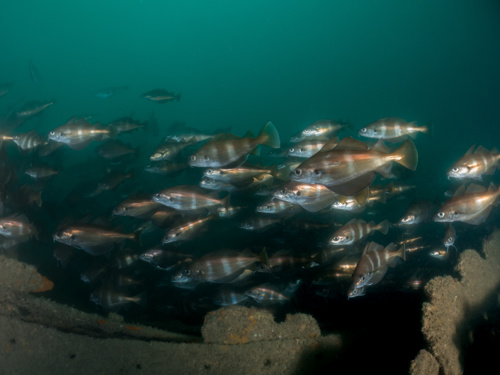
Examples of Marine Natural Capital Approaches
Marine natural capital approaches are already being applied across policy, management and planning (see Case studies report). Examples include:
- Natural capital accounting for marine protected areas, coastal plans and wider seascapes.
- Marine Net Gain assessments to understand how developments can deliver environmental improvements.
- Marine spatial planning using ecosystem service evidence to support zoning and trade-off analyses.
- Payments for ecosystem services such as blue carbon credits and habitat enhancement schemes.
- Ecosystems Approach frameworks that integrate ecological, social and economic factors.
- Community-based fisheries management informed by natural capital evidence.
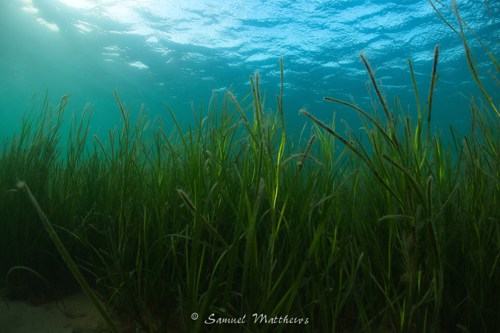
Who Uses These Approaches
Marine natural capital evidence is used by:
- UK and Devolved Administrations
- Statutory Nature Conservation Bodies
- Marine planning authorities
- Regulators and licensing bodies
- Industry, including offshore wind, fisheries and marine infrastructure
- Academic and research institutions
- Local communities, NGOs and environmental partnerships
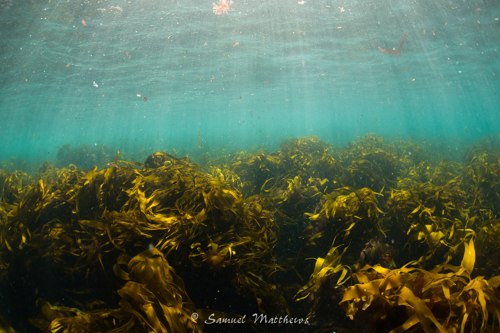
JNCC's Role
At JNCC, we unlock information about the value of the marine environment by building tools and evidence products to map, monitor and measure ecosystem services. Therefore, providing the essential building blocks and steps needed to facilitate decisions that benefit both nature and society.
Policy advice includes areas such as the sustainable blue economy, marine management, and the UK Marine Strategy. Working collaboratively with other statutory organisations, we have a unique role in ensuring advice is used consistently across the four countries of the UK and shared on the international stage. Decision-support tools support governments, regulators and industry. Some of our key outputs are presented in the NC Workflow Explorer.
Further information can be found in our JNCC Showcase on NC work.
Marine Natural Capital Workflow Explorer
Outputs from this work are presented in the Marine Natural Capital Workflow Explorer, which provides a structured and process-oriented way to navigate assets, ecosystem services, condition and benefits. The workflow allows practitioners to enter at any stage of an assessment and identify the information and tools relevant to their needs.
Marine Natural Capital Hub: Workflow Explorer
Purpose of the Marine Natural Capital Hub
The Marine Natural Capital Hub has been developed to showcase the evidence, tools and approaches generated through the Defra Marine Natural Capital and Ecosystem Assessment (mNCEA) programme, alongside contributions from the wider marine natural capital community. Its purpose is to bring together the methods, maps and assessments created during the programme in a clear and accessible way, allowing users to explore how these outputs can support policy, management and decision-making across the UK marine area. The Hub acts as a central space where users can understand what has been developed, how these tools work and how they can be applied in real‑world contexts.
Why We Use a Workflow Approach
Marine natural capital workflows are commonly referenced in the literature as a logical way to present and interpret information. We have chosen a workflow approach because it provides a logical structure for presenting the wide range of tools and methods developed through mNCEA. Marine natural capital assessments involve several interconnected stages including identifying assets, describing ecosystem services, assessing condition and understanding the benefits that flow to society. Organising the mNCEA outputs around this workflow shows how each component fits together and highlights the distinct role of each tool within the assessment process.
This approach also makes it easier for users to navigate the materials. By following the workflow, users can see how evidence builds from habitat and species data through to service delivery and ultimately to the benefits relevant for management. It provides a consistent framework for showcasing the outputs of the programme, demonstrating both the breadth of work completed and how these tools can be combined to support integrated marine management.
The platform presented here complements the DASSH Data Archive Centre Marine Natural Capital Assessment Guidance (NE, 2025) which is a ‘resource for users wanting to carry out a comprehensive assessment of the environmental, social and economic characteristics of their local marine area’.




Marine NCEA Programme
The Marine Natural Capital and Ecosystem Assessment Programme (mNCEA) ran for three years (2022 to 2025) and consisted of a combination of monitoring, innovation and application projects, the marine arm of the programme explored the state of England’s marine and coastal natural assets, the benefits they provide, and the value they hold for people. The programme delivered natural capital evidence, tools and guidance to inform policy and decision-making for marine and coastal environments.
Marine NCEA outputs will be available by the end of March 2026:
-
data is discoverable through the Marine Environmental Data and Information Network (MEDIN)
-
project reports on Science Search – you can find them by entering “ME45” in the search box
The programme was led by Defra and delivered in partnership with 5 of its arm’s length bodies:
- Cefas (Centre for Environment, Fisheries and Aquaculture Science)
- Environment Agency
- Joint Nature Conservation Committee
- Marine Management Organisation
- Natural England
mNCEA Outputs Library
Marine Natural Capital Hub: mNCEA Outputs Library
Marine Natural Capital Approaches Across the UK
In response to national and international policy and legislation, natural capital concepts are increasingly being employed by statutory nature conservation bodies and governments throughout the United Kingdom. However, the language used and approaches to these concepts can vary between groups. The purpose of this section is to create a common platform of natural capital understanding across all parties by providing examples of how some such policies, plans, strategies and forums incorporate natural capital approaches into their wording. The Natural Capital Committee (NCC) has produced a list of definitions which can further facilitate clarity in natural capital work.
Examples are provided below of some approaches being used in the four countries of the UK.
While the term natural capital is not always explicitly used, visions of maintaining or enhancing healthy ecosystems that promote economic, social and cultural benefits are aligned with natural capital approaches and are a common goal throughout the UK. Identifying these shared values allows conversations around these themes to continue, knowledge to be shared and progress towards achieving these visions to be made.
England
The 25 Year Environment Plan (25 YEP) places a strong emphasis on the execution of a natural capital approach to achieve its environmental, economic and social targets. It stresses that the value of nature cannot always be quantified or given a monetary value, nor does it need to be, and as such affirms that the natural capital approach is simply a tool to aid in decision-making. The plan recognises that marine ecosystems do not adhere to territory boundaries and that healthy ecosystems are required to maintain the flow of benefits derived from them. It therefore states the need to work with bordering and international countries to protect natural assets and secure natural capital. Furthering the 25 YEP, the Environmental Improvement Plan (EIP) 2023 reiterates that human health and prosperity rely on "thriving ecosystems" and reports English natural capital to be worth an estimated £1.8 trillion. As such, the EIP 2023 lays out how England will ensure its natural assets, and hence natural capital, are protected and restored.
A summary of relevant policies, plans, strategies and statutory requirements; and projects and forums in England is provided below:
Policies, plans, strategies and statutory requirements:
- Environmental Improvement Plan 2025 (published 2025)
- 25 Year Environment Plan (published 2018)
Projects and forums:
- Marine Natural Capital and Ecosystem Assessment Programme (mNCEA); project reports on Science Search – you can find them by entering “ME45” in the search box
- DASSH Data Archive Centre Marine Natural Capital Assessment Guidance
- Natural England's Natural Capital Atlases
- Natural Capital Approach: Marine Case Studies (JNCC Report 685)
- Natural capital benefits of MPA management in Lyme Bay (JNCC Report 773)
- Sussex Kelp Restoration Project
- Cornwall Council Blue Natural Capital Project
Northern Ireland
The draft Marine Plan and the draft Environment Strategy for Northern Ireland both advocate for an ecosystem-based approach that bolsters economic growth and promotes the delivery of social and cultural benefits from the marine environment for future generations. The draft Environment Strategy explains the natural capital approach, but the draft Marine Plan does not mention the concept.
A summary of relevant policies, plans, strategies and statutory requirements; and projects and forums in Northern Ireland is provided below:
Policies, plans, strategies and statutory requirements:
- (Draft) Marine Plan for Northern Ireland (published 2018)
- (Draft) Environment Strategy for Northern Ireland (published 2022)
Projects and forums:
Scotland
In Scotland, economic prosperity and social equality are couched in the context of a thriving marine environment. This concept is central to the Scottish Biodiversity Strategy to 2045 and Scotland's Blue Economy Vision. The former sets out five Priority Actions for 2030 to help protect and restore Scotland's terrestrial and marine biodiversity to "drive a sustainable economy and support thriving communities". By 2045, a stated outcome of the Biodiversity Strategy is that "natural capital will be embedded in policymaking". Scotland's National Marine Plan helps frame the country's Blue Economy Vision which defines six outcomes, all of which embody natural capital themes. The first outcome, the "Natural Capital Outcome", aims to ensure that the marine environment, and the resources and services it can provide, is "safeguarded for present and future generations" by adopting an ecosystem approach to manage marine activities. The Blue Economy Vision also strives for healthier, regenerated communities through fairer access to ocean-derived benefits and emphasises the need for existing and emerging industries to be resource efficient, innovative and internationally competitive while operating to meet net zero and nature-positive commitments.
A summary of relevant policies, plans, strategies and statutory requirements; and projects and forums in Scotland is provided below:
Policies, plans, strategies and statutory requirements:
- A Blue Economy Vision for Scotland (published 2022)
- Scottish Biodiversity Strategy to 2045 (published September 2023)
- Scotland's National Marine Plan (published 2015)
- Climate Ready Scotland: climate change adaptation programme 2019–2024 (published 2019)
- Scotland's National Strategy for Economic Transformation (published 2022)
Projects and forums:
- Solway Firth Partnership – SMILE Project
- Natural Capital Innovation Zone
- Scottish Blue Carbon Forum
- Scottish Forum on Natural Capital – Marine Natural Capital Forum Scotland (MNCFS)
- Scottish Nature Finance Pioneers
- Oceans of Value (Scottish Wildlife Trust)
- The Solway Coastodians
Wales
Established by the Environment (Wales) Act 2016, and acknowledging that Wales's natural assets underpin the country's human health and well-being, Natural Resources Wales have adopted a "sustainable management of natural resources" approach to "enhance ecosystem resilience and the benefits they provide". By using this approach to deliver the Welsh National Marine Plan (WNMP), which reiterates the need to protect ecosystems to conserve both the physical and intangible benefits that humans derive from them, and whose stated objectives include "achieving a sustainable blue economy", Wales will also make headway towards the seven well-being goals laid out in the Well-Being of Future Generations (Wales) Act 2015. The cabinet statement from Julie James MS expressed plans to also incorporate recommendations from the "Biodiversity Deep Dive" to implement spatial direction through the WNMP. Objectives of the Biodiversity Deep Dive include restoring habitats, protecting them from destructive fishing methods and getting them to favourable condition – all of which would help secure natural capital and the flow of benefits to humans.
Similarly, the vision for the Nature Recovery Action Plan 2026 adopts that of the Global Biodiversity Framework and has ecosystem services at its heart “By 2050, biodiversity is valued, conserved, restored and wisely used, maintaining ecosystem services, and sustaining a healthy planet and delivering benefits essential for all people”.
A summary of relevant policies, plans, strategies and statutory requirements; and projects and forums in Wales is provided below:
Policies, plans, strategies and statutory requirements:
- Nature Recovery Action Plan: 2026
- State of Natural Resources Report 2025
- Welsh Marine Evidence Strategy 2019–2025 (published 2019)
- Welsh National Marine Plan (published 2019)
- Environment (Wales) Act 2016
- Well-being of Future Generations (Wales) Act 2015
- Sustainable Management of Natural Resources
- Natural Resources Policy (published 2017)
- Biodiversity Deep Dive (recommendations published 2022)
Projects and forums:
- Blue Carbon Programme
- Marine Monitoring Programme
- Wales Coast and Seas Partnership (CaSP Cymru)
- Blue Recovery
- National Peatland Action Programme
UK Sustainable Blue Economy
Understanding UK’s Sustainable Blue Economy
A Sustainable Blue Economy approach is defined by any economic activities associated with the ocean and coast that protects ecosystems, benefits society and wellbeing (Luk and Siriwardena, 2025). This considers the natural world’s ability to provide benefits to people and the economy, whilst maintaining or improving good marine ecosystem health (Luk and Siriwardena, 2025; Marine Scotland, 2022).
The UK’s marine and coastal assets were recently valued at £272 billion in 2022 (£120 billion when abiotic ecosystem services are excluded) (Office for National Statistics, 2025). The maritime sector alone supports 227,100 jobs providing £49 billion in turnover annually. The marine science and engineering (MES) sector accounts for two thirds of the maritime sector and includes green technology, into the sustainable blue economy (Centre for Economics and Business Research, 2022). Societal and health benefits of recreation under the blue economy have been valued around £1 billion and £0.7 billion of sequestered carbon from seagrass alone (Office for National Statistics, 2025).
Under the UK green finance strategy the government has a set a target to create £500 million annually in 2027 and £1 Billion by 2030 from private investment which will actively fund blue economy projects (UK Government, 2023).
Scotland is the first country to actively set out ambitions under their ‘Blue Economy Vision for Scotland’ where it sets out environmental, social and economic targets for 2045 (Marine Scotland, 2022). However, blue economy concepts are still considered across devolved governments through projects that utilise aligning principles like the 25 Year Environment Plan and mNCEA project (Defra, 2022; HM Government, 2023).
The sustainable blue economy approach is also being applied at local levels, a great example of this being trialled is the Plymouth Sound National Marine Park (PSNM) (Plymouth City Council, 2021).
Key definitions of the Blue Economy
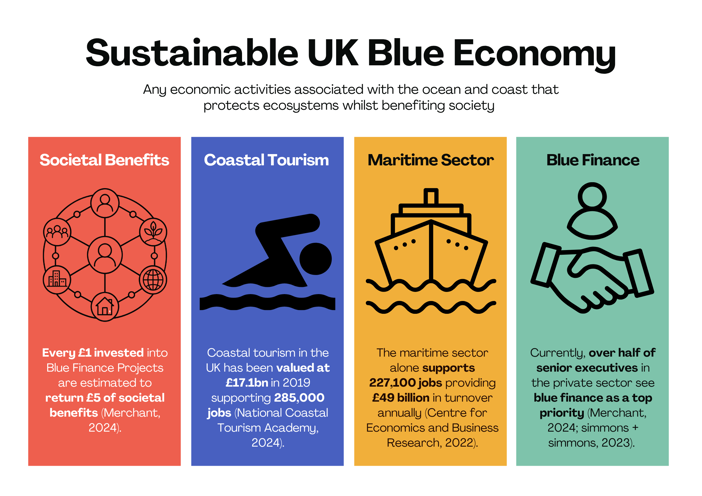
Sustainable Blue Economy - Economic activities associated with the ocean and coast that protects ecosystems and benefits society and wellbeing (Luk and Siriwardena, 2025).
Blue Finance - Investments and financial instruments that support a sustainable blue economy, it achieves this through products like blue bonds and blue loans (International Finance Corporation, 2023; Merchant, 2024).
Blue Bonds - Debt instruments provided by governments or banks that raise finances for marine based projects that benefit the environment, climate and economy (World Bank, 2018).
Carbon credits – Transferable tokens that are used to represent avoidance or removal of carbon dioxide in the atmosphere and can be applied to UK Greenhouse Gas Inventory (Blue Marine Foundation et al., 2023).
Carbon markets – Economic trading system where carbon credits are sold and bought. These are often used to compensate for greenhouse gas emission by providing a flow of capital into restoration of marine habitats that sequester and store carbon e.g seagrass (Blue Marine Foundation et al., 2023).
What is Blue Finance?
Blue Finance is any investments and financial instruments that support a sustainable blue economy, it achieves this through financial instruments like blue bonds and blue loans (International Finance Corporation, 2023; Merchant, 2024). Blue finance is a key method to invest into environmentally positive projects like habitat restoration, aquaculture and marine technologies and meet the UN’s Goal 14 ‘Life Below Water’ targets (Merchant, 2024; United Nations, 2025). It has been estimated that every £1 invested into blue finance projects a £5 return through societal benefits be seen (Merchant, 2024). However, currently, funding for these 2030 targets is below the projected $175 Billion USD required globally (Johansen and Vestvik, 2020; World Economic Forum, 2022).
Currently, blue finance is mostly provided by public funds or philanthropic projects, although over half of senior executives in the private sector see blue finance as a top priority, with barriers being the small scales of current projects and lack of methods to measure the impact and performance of projects (Merchant, 2024; simmons + simmons, 2023).
Blue carbon markets are a good example of blue finance being integrated into the private sector (Blue Marine Foundation et al., 2023). Efforts are also in place to develop high-integrity marine natural capital markets for multiple sectors, however, there are still multiple financial, scientific and policy barriers in getting these into place (Blue Marine Foundation et al., 2023).
Blue Carbon and Habitat Restoration
Blue Carbon Markets are examples of blue finance being well applied to the private sector, as it places a price on greenhouse gas emissions, whilst funding restoration through carbon credits e.g. the saltmarsh carbon code (Blue Marine Foundation et al., 2023; Mason et al., 2022).
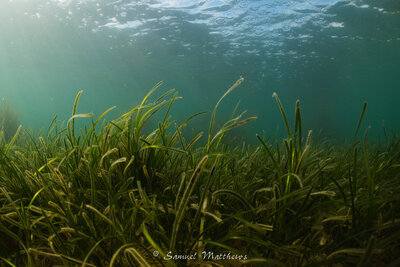
UK blue carbon habitats include everything from seagrass, saltmarsh to oyster beds, which provide inherent economic value through their carbon sequestration abilities (Rendon et al., 2026). However, these habitats have seen large declines in distribution from their original extent. Seagrass has declined 92%, saltmarsh by 85% and oyster beds showing serious decline (Bennema et al., 2020; Berghahn and Ruth, 2005; Green et al., 2021; Ward et al., 2023).
A great example of blue carbon restoration can be seen under the PSNM case study in Plymouth that has trialled seagrass restoration in Plymouth sound (Blue Marine Foundation et al., 2023; Natural England, 2021; Rees et al., 2023).
The restoration of these blue carbon habitats also provide value outside of blue carbon, when other ecosystems services (coastal protection, nursery habitat, food provision and cultural value) are considered their value increases 10-100 fold (Rendon et al., 2026).
Plymouth National Marine Park (Horizons Project) – a regional case study
The Plymouth Sound National Marine Park (PSNM) aims to ‘encourage reconnection of the city to the sea, marine environment and its history whilst promoting economic ‘blue/green’ recovery by adding £20 million into the local economy (Plymouth City Council, 2024, 2021). To achieve this the PSNM is investing into seagrass restoration projects within the sound and the associated cost and benefits of seagrass restoration with currently 6 ha restored through planting of 16,000 seed bags in the sound (Blue Meadows, 2026; Early et al., 2022; Natural England, 2021).
Ecosystem services That Underpin the Blue Economy
Securing a sustainable energy future
Ensuring affordable, accessible and sustainable energy is a key priority to the UK government and is a core component of a sustainable blue economy and reach net zero emissions by 2050 (UK Government, 2024). Offshore renewables are considered more affordable than a single fossil-fuel price shock, with a projected 1000% return in gross value added (GVA) over 10 years (Burnett et al., 2026; Climate-Change-committee, 2026; The Crown Estate, 2024). In 2025 over half (52.5%) of energy generation was generated by renewable technologies with wind energy providing 30% of this (UK Government, 2026). Offshore wind is a growing industry expected to 100,000 jobs by 2030 (Department for Energy Security and Net Zero, 2025). When projected to 2050 up to 1.1 billion tonnes of carbon dioxide between will have been removed (Hawkins, 2010).
Food Provisioning
One of the UK’s largest marine and coastal industries is food provisioning whether through fisheries or aquaculture. These industries can be valuable to the economy, society and food security if well managed in a sustainable and holistic way (Coulthard et al., 2025).
Fisheries
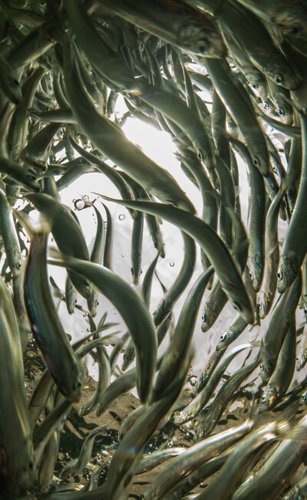
UK fisheries have an estimated annual landings value of £966 million (2023) supporting over 6,600 jobs, with the North Sea making up nearly half of this value (45%) (Marine Management Organisation, 2024; Oceana, 2025; Seafish, 2024).
However, without a sustainable fishery these economic benefits will dwindle in the future, reducing capacity of economic benefits from other services provided by the marine ecosystem (Cordingley et al., 2026; Millage et al., 2026). As of 2020, less than half (49%) of UK fisheries were being exploited at or below maximum sustainable yield (MSY) with 28% above MSY or considered unsustainable in the long term (Garnacho et al., 2024). Although a marked improvement from the 1990’s where 42% of fisheries were above MSY or considered unsustainable in the long term, to ensure long term benefits of a sustainable blue economy, continued improvement in sustainable fishery management should continue (Garnacho et al., 2024).
The economic value of other ecosystem services and impacts of fishing practices may have on them should be considered in a holistic manner to ensure optimum economic benefits to society (Cordingley et al., 2026).
Aquaculture
As demand for protein and the need food security increase, aquaculture can contribute to resolving this (FAO, 2020). Economic data on the aquaculture industry isn’t as readily available as fisheries, however, in 2021 the industry was valued at £1 billion with Scottish Atlantic salmon farms dominating the industry at 90% of total profits (Seafish, 2022). It’s considered a growing industry in the UK (and the world) with annual outputs increasing 600% in 30 years since 1990 (Seafish, 2022). Aquaculture is expected to continue to increase and is expected to be valued at £3.6 billion by 2030, supporting 18,000 jobs (Highland and islands enterprise and ekosgen, 2023).
There is also, plenty of potential for sustainable growth in the aquaculture sector. Seaweed and shellfish aquaculture is a small but growing sector in the UK (Mascorda-Cabre et al., 2024; Shellfish Assosiation of Great Britain, 2023; Wilding et al., 2021). These can provide multiple societal benefits outside of food security, providing essential services like waste remediation, storm attenuation, nursery habitat provision and ecosystem restoration (Jueterbock et al., 2025; Macias et al., 2025; Mascorda-Cabre et al., 2024; Veenhof et al., 2024; Woźniacka, 2024).
Recreation and Tourism
The UK’s coasts have always had cultural importance whether it be through summer holidays to fishing communities (Martino et al., 2023; Shaw and Williams, 1997). Coastal tourism in the UK has been valued at £17.1bn (2019) supporting 285,000 jobs (National Coastal Tourism Academy, 2024).
Coastal recreation is popular with 271 million trips a year, including 59 million water based activities taking place (Elliott et al., 2018). Using the Southwest coast path as a case study from tourists had a total direct spend of £436 million in local businesses annually (Elliott et al., 2018). Recreation in the marine environment has clear psychological, physical and societal benefit which has been valued at £1-1.29 Billion annually (Britton et al., 2020; Elliott et al., 2018; Georgiou et al., 2021; Office for National Statistics, 2025; Wheaton et al., 2021; White et al., 2021; Yoon, 2026).
Marine Natural Capital News Sources
-
Blue Economy News - Blue Economy News – Get the latest news on Blue Economy
-
Capitals Coalition News and Events - News & Events - Capitals Coalition
-
Ecosystem Services Partnership - https://www.es-partnership.org
-
Ocean Risk and Resilience Action Alliance (Orra) News and Views - Latest - ORRAA
-
Organisation for Economic Co-operation and Development (OECD) - Ocean | OECD
-
The EU Blue Economy Report - The EU Blue Economy report | Knowledge for policy
-
UNEP Ocean, seas and coasts - News, Stories & Speeches | UNEP - UN Environment Programme
References
Bennema, F.P., Engelhard, G.H., Lindeboom, H., 2020. Ostrea edulis beds in the central North Sea: delineation, ecology, and restoration. ICES J. Mar. Sci. 77, 2694–2705. https://doi.org/10.1093/icesjms/fsaa134
Berghahn, R., Ruth, M., 2005. The disappearance of oysters from the Wadden Sea: a cautionary tale for no-take zones. Aquat. Conserv. Mar. Freshw. Ecosyst. 15, 91–104. https://doi.org/10.1002/aqc.635
Blue Marine Foundation, The Crown Estate, Finance Earth, Pollination, 2023. Developing high-integrity marine natural capital markets in the UK.
Blue Meadows, 2026. Plymouth sound Case Study [WWW Document]. URL https://bluemeadows.org/case-study/jennycliff-bay/
Britton, E., Kindermann, G., Domegan, C., Carlin, C., 2020. Blue care: a systematic review of blue space interventions for health and wellbeing. Health Promot. Int. 35, 50–69. https://doi.org/10.1093/heapro/day103
Burnett, N., Stewart, I., Hewitt, T., 2026. The UK’s Plans and Progress to Reach Net Zero by 2050 (No. 9888). House of Commons.
Centre for Economics and Business Research, 2022. State of the Maritime Nation 2022. Maritime UK.
Climate-Change-committee, 2026. Supplementary analysis of the Seventh Carbon Budget.
Cordingley, A., Matthews, S., Holden, M., Anderson, L., Morgan, V., Adams, M., 2026. WP 4 Assessing the Economic Implications of Marine Protected Area Designation and Enhanced Protection (JNCC for Defra (Unpublished)). JNCC, Peterborough.
Coulthard, S., Hatt, A., Lewis, P., Stewart, B.D., Roach, M., Clark, R., Fanshawe, S., White, C.S., Urquhart, J., Percy, J., Gray, T., Bulled, E., Richards, J., Turner, R., Baker, E., Evans, L., Chaigneau, T., Hooper, T., Longsden, J., Anbleyth‐Evans, J., 2025. Recognising and Protecting the National Benefit of Sustainable Fisheries in the UK. Fish Fish. 26, 561–576. https://doi.org/10.1111/faf.12898
Defra, 2022. Marine Natural Capital and Ecosystem Assessment (mNCEA) Programme. Department for Environment, Food & Rural Affairs.
Department for Energy Security and Net Zero, 2025. Job estimates for wind generation by 2030: methodology note [WWW Document]. URL https://www.gov.uk/government/publications/renewable-technologies-future-job-estimates-methodology/job-estimates-for-wind-generation-by-2030-methodology-note (accessed 4.30.26).
Early, R.I., Duffy, J.P., Ashton, I.G.C., Maclean, I.M.D., McNie, F., Selley, H.A., Laing, G.C., 2022. Modelling potential areas for Seagrass restoration within Plymouth Sound & Estuaries SAC and Solent Maritime SAC as part of the LIFE fund Recreation ReMEDIES project, 2020 (Natural England Commissioned Reports No. NECR430). UofE Consulting Ltd commissioned for Natural England.
Elliott, L.R., White, M.P., Grellier, J., Rees, S.E., Waters, R.D., Fleming, L.E., 2018. Recreational visits to marine and coastal environments in England: Where, what, who, why, and when? Mar. Policy 97, 305–314. https://doi.org/10.1016/j.marpol.2018.03.013
ENCA, 2020. Enabling a Natural Capital Approach (ENCA) Guidance. Defra https://www.gov.uk/government/publications/enabling-a-natural-capital-approach-enca-guidance (Updated 2026)
FAO, 2020. The State of World Fisheries and Aquaculture 2020. FAO. https://doi.org/10.4060/ca9229en
Garnacho, E., Campón-Linares, V., Oliveira, J.D., Bell, E., 2024. Pressure indicator assessment of commercially exploited fish and shellfish for the UK Marine Strategy. In: UK Marine Online Assessment Tool [WWW Document]. URL Gross Value Added (GVA) (accessed 5.1.26).
Georgiou, M., Morison, G., Smith, N., Tieges, Z., Chastin, S., 2021. Mechanisms of Impact of Blue Spaces on Human Health: A Systematic Literature Review and Meta-Analysis. Int. J. Environ. Res. Public. Health 18, 2486. https://doi.org/10.3390/ijerph18052486
Green, A.E., Unsworth, R.K.F., Chadwick, M.A., Jones, P.J.S., 2021. Historical Analysis Exposes Catastrophic Seagrass Loss for the United Kingdom. Front. Plant Sci. 12, 629962. https://doi.org/10.3389/fpls.2021.629962
Hawkins, R., 2010. The Offshore Valuation: A valuation of the UK’s offshore renewable energy resource. The Offshore Valuation Group.
Highland and islands enterprise, ekosgen, 2023. The Blue Economy in the Highlands and Islands Towards a regional delivery plan.
HM Government, 2023. Environmental Improvement Plan 2023. First revision of the 25 Year Environment Plan. (Corporate Report). Department for Environment Food and Rural Affairs.
International Finance Corporation, 2023. Blue Finance at IFC [WWW Document]. URL https://www.ifc.org/en/what-we-do/sector-expertise/financial-institutions/climate-finance/blue-finance (accessed 4.29.26).
Johansen, D.F., Vestvik, R.A., 2020. The cost of saving our ocean - estimating the funding gap of sustainable development goal 14. Mar. Policy 112, 103783. https://doi.org/10.1016/j.marpol.2019.103783
Jueterbock, A., Hoarau-Heemstra, H., Wigger, K., Duarte, B., Bruckner, C., Chapman, A., Duan, D., Engelen, A., Gauci, C., Hill, G., Hu, Z.-M., Khanal, P., Khatei, A., Mackintosh, A., Meland, H., Melo, R., Nilsen, A.M.L., Olsen, L., Rautenberger, R., Reiss, H., Zhang, J., 2025. Roadmap to sustainably develop the European seaweed industry. Npj Ocean Sustain. 4, 22. https://doi.org/10.1038/s44183-025-00122-9
Luk, S., Siriwardena, S., 2025. Seas of Opportunity: A Guide to the Blue Economy. Marine Conservation Society and Simmons Simmons.
Macias, D., Guillen, J., Duteil, O., Garcia-Gorriz, E., Ferreira-Cordeiro, N., Miladinova, S., Parn, O., Piroddi, C., Polimene, L., Serpetti, N., Stips, A., 2025. Assessing the potential for seaweed cultivation in EU seas through an integrated modelling approach. Aquaculture 594, 741353. https://doi.org/10.1016/j.aquaculture.2024.741353
Marine Management Organisation, 2024. UK Sea Fisheries Statistics Report (2023). Marine Management Organisation.
Marine Scotland, 2022. A Blue Economy Vision for Scotland. Marine Scotland for Scottish Government.
Martino, S., Azzopardi, E., Fox, C., Chiaroni, E., Payne, E., Kenter, J., 2023. The importance of local fisheries as a cultural attribute: insight from a discrete choice experiment of seafood consumers. Marit. Stud. 22, 22. https://doi.org/10.1007/s40152-023-00308-2
Mascorda-Cabre, L., Hosegood, P., Attrill, M.J., Sheehan, E.V., 2024. Biogenic reef creation and biodiversity enhancement by an offshore longline mussel farm. Ecol. Indic. 167, 112708. https://doi.org/10.1016/j.ecolind.2024.112708
Mason, V.G., Wood, K.A., Jupe, L.J., Burden, A., Skov, M.W., 2022. Saltmarsh Blue Carbon in UK and NW Europe – evidence synthesis for a UK Saltmarsh Carbon Code (Report to the Natural Environment Investment Readiness Fund). UK Centre for Ecology & Hydrology, Bangor.
Merchant, J., 2024. Introduction to Blue Finance. Marine Conservation Society.
Millage, K.D., Mayorga, J., Orofino, S., Atwood, T.B., Friedlander, A.M., Teh, L.S.L., Palomares, M.L.D., Sumaila, U.R., Sala, E., 2026. The value of bottom trawling in Europe. Ocean Coast. Manag. 108135. https://doi.org/10.1016/j.ocecoaman.2026.108135
National Coastal Tourism Academy, 2024. Coastal Tourism Overview [WWW Document]. URL https://coastaltourismacademy.co.uk/resource-hub/resource/coastal-tourism-overview--may-2024
Natural England. 2025. Marine Natural Capital Assessment Guidance. 2025. Available from: Archive for Marine Species and Habitats Data (DASSH). (InteractiveResource). https://doi
Natural England, 2021. Life Recreation ReMEDIES.
Oceana, 2025. The Socio-Economic Characteristics of UK Fisheries. Oceana.
Office for National Statistics, 2025. Marine and coastal margins natural capital accounts, UK: 2025. Office for National Statistics, UK.
Plymouth City Council, 2024. The Horizons Project [WWW Document]. URL https://plymouthsoundnationalmarinepark.com/the-horizons-project/
Plymouth City Council, 2021. Plymouth Sound National Marine Park: Outline Activity Plan / OL-19-03781. Plymouth City Council, Plymouth.
Rees, S., Attril, M., Ashley, M., Mullier, T., Cramp, J., Hooper, G., Fisher, J., 2023. Developing the business case and a pilot transaction for seagrass restoration. University of Plymouth, Plymouth City Council, Plymouth.
Rendon, O.R., Kaloudis, D., Beaumont, N.J., 2026. Co-benefits reveal the true value of blue ecosystems. Cell Rep. Sustain. 3, 100582. https://doi.org/10.1016/j.crsus.2025.100582
Seafish, 2024. Economics of the UK Fishing Fleet 2023 (No. 36291).
Seafish, 2022. Aquaculture data and insight [WWW Document]. URL https://www.seafish.org/insight-and-research/aquaculture-data-and-insight/#size-and-performance-of-sector (accessed 5.1.26).
Shaw, G., Williams, A.M., 1997. The Rise and Fall of British Coastal Resorts: Cultural and Economic Perspectives. Mansell, University of Michigan.
Shellfish Assosiation of Great Britain, 2023. Socio-economic Impacts of Water Quality on the UK’s Shellfish Aquaculture Industry. Shellfish Assosiation of Great Britain.
simmons + simmons, 2023. Sustainability: Obligatoion to Advantages [WWW Document]. URL https://simmons-simmons.foleon.com/esg/unlocking-growth-and-profit/obligation-to-advantage
The Crown Estate, 2024. Offshore Wind Report 2024.
UK Blue Carbon Evidence Partnership, Defra, Desnz, Daera, Welsh Government, Scottish Government, 2023. UK Blue Carbon Evidence:Partnership Evidence Needs Statement.
UK Government, 2026. Energy Trends: UK renewables.
UK Government, 2024. Clean Power 2030 Action Plan: A new era of clean electricity.
UK Government, 2023. Mobilising Green Investment: 2023 Green Finance Strategy.
United Nations, 2025. The Sustainable Development Goals Report 2025. United Nations.
Veenhof, R.J., Burrows, M.T., Hughes, A.D., Michalek, K., Ross, M.E., Thomson, A.I., Fedenko, J., Stanley, M.S., 2024. Sustainable seaweed aquaculture and climate change in the North Atlantic: challenges and opportunities. Front. Mar. Sci. 11, 1483330. https://doi.org/10.3389/fmars.2024.1483330
Ward, M., Cullen-Unsworth, L., Geisler, Karen.G., Lilley, R., Lynch, J., Millington-Drake, M., Pittman, S.J., Smith, A., Taylor, S., Wedding, L.M., Wright, R., Seddon, N., 2023. Developing a UK Seagrass Carbon Code. University of Oxford.
Wheaton, B., Waiti, J.T.A., Olive, R., Kearns, R., 2021. Coastal Communities, Leisure and Wellbeing: Advancing a Trans-Disciplinary Agenda for Understanding Ocean-Human Relationships in Aotearoa New Zealand. Int. J. Environ. Res. Public. Health 18, 450. https://doi.org/10.3390/ijerph18020450
White, M.P., Elliott, L.R., Grellier, J., Economou, T., Bell, S., Bratman, G.N., Cirach, M., Gascon, M., Lima, M.L., Lõhmus, M., Nieuwenhuijsen, M., Ojala, A., Roiko, A., Schultz, P.W., Van Den Bosch, M., Fleming, L.E., 2021. Associations between green/blue spaces and mental health across 18 countries. Sci. Rep. 11, 8903. https://doi.org/10.1038/s41598-021-87675-0
Wilding, C., Tillin, H.M., Corrigan, S.E., Stuart, E., Ashton, I.A., Felstead, P., Lubelski, A., Burrows, M., Smale, D., 2021. Seaweed aquaculture and mechanical harvesting: an evidence review to support sustainable management (Natural England Commissioned Report No. 378). Natural England.
World Bank, 2018. Sovereign Blue Bond Issuance: Frequently Asked Questions [WWW Document]. URL https://www.worldbank.org/en/news/feature/2018/10/29/sovereign-blue-bond-issuance-frequently-asked-questions (accessed 6.9.26).
World Economic Forum, 2022. SDG14 Financing Landscape Scan: Tracking Funds to Realize Sustainable Outcomes for the Ocean. Friends of Ocean Action.
Woźniacka, K., 2024. Ecosystem Services of Commercially Important Bivalves in the UK: Nutrient removal services. Report commissioned by the Shellfish Stakeholder Working Group.
Yoon, H., 2026. The healing effects of marine tourism and life satisfaction. World J. Adv. Res. Rev. 29, 1069–1075. https://doi.org/10.30574/wjarr.2026.29.2.0395
Published: .